
FARMLAND & AGRICULTURAL LAND INVESTMENTS
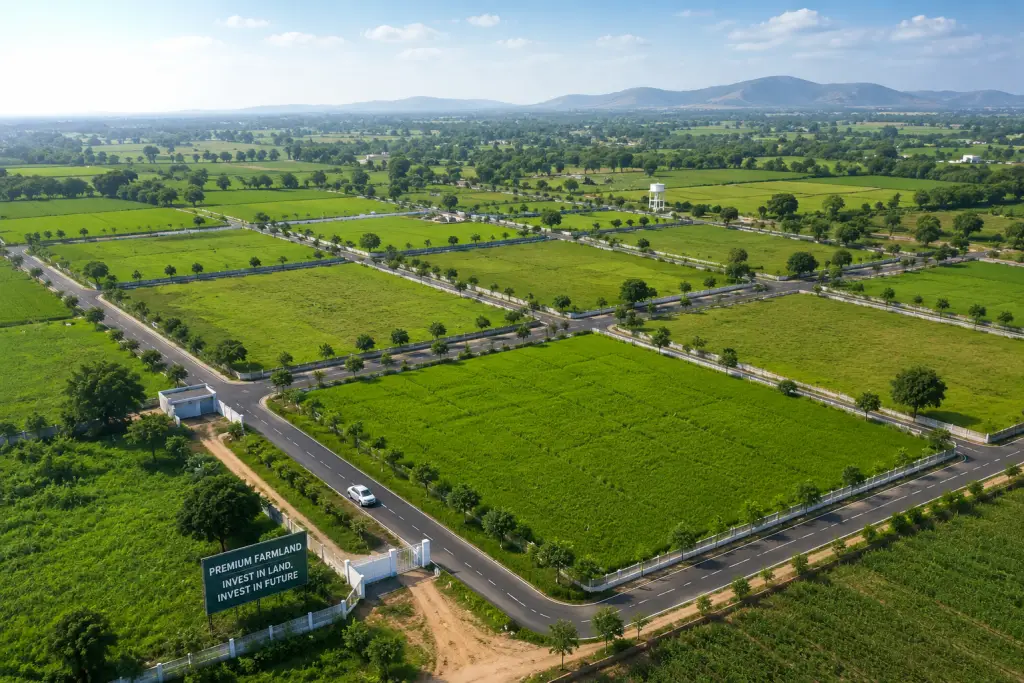
We provide structured advisory and transaction support for agricultural land and farmland investments, including gated farm plots, weekend retreat land parcels, and long-term land banking opportunities.
Our focus extends beyond simple buying and selling. We assist investors in evaluating location growth corridors, connectivity access, legal clarity, land use compliance, and long-term appreciation potential before any acquisition decision.
Whether you are acquiring farmland for asset diversification, future development potential, lifestyle retreat planning, or capital preservation, our advisory approach ensures transparent documentation, structured evaluation, and secure ownership execution at every stage.
When Is the Right Time to Invest in Farmland?
The right time to invest in farmland is determined by location growth potential, infrastructure development plans, land availability trends, and long-term capital allocation strategy—rather than short-term price movements.
Unlike residential property, agricultural land investments are driven by future connectivity corridors, tourism expansion, regional development plans, and land scarcity. Early entry in emerging growth belts often provides stronger appreciation potential over time.
A well-timed farmland acquisition aligns financial readiness with strategic location selection, legal due diligence, and long-term holding capacity. Structured evaluation ensures that the investment supports both asset security and value growth.
Key Investment Considerations
- Assess land title clarity and ownership documentation before commitment
- Evaluate road access, water availability, and infrastructure connectivity
- Study regional development plans and future growth corridors
- Align investment horizon with long-term appreciation goals
Farmland acquisition is a strategic long-term investment and should be approached with structured evaluation and professional guidance. Unlike residential property transactions, agricultural land involves additional considerations such as zoning classification, land use permissions, access rights, and future development feasibility.
Beyond pricing, investors must assess title clarity, infrastructure connectivity, local regulations, and long-term usability potential before proceeding with any acquisition.
Proper documentation review, boundary verification, and compliance checks are essential to safeguard capital and reduce avoidable legal and transactional risks.
Our advisory approach focuses on helping investors evaluate land parcels with clarity, ensuring secure ownership, transparent processes, and disciplined transaction execution from initial assessment to final registration.
Looking to Invest in Farmland?
Connect with our land advisory team for structured guidance on agricultural land, gated farm plots, and long-term land investment opportunities.
Land Verification & Transaction Documentation
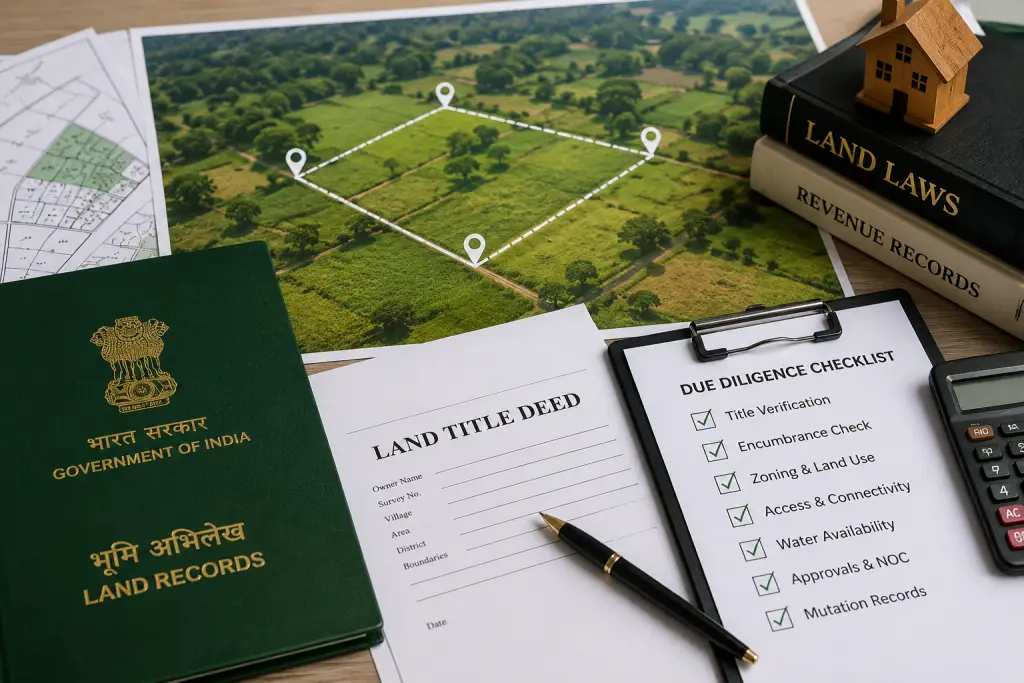
Farmland transactions require careful evaluation of land titles, ownership records, zoning permissions, and regulatory compliance before acquisition. Each stage—from verification to final registration—should be reviewed with procedural clarity to ensure secure and transparent transactions.
Important considerations include title authenticity, access roads, water availability, land use classification, and government approvals. Structured due diligence minimizes legal risks and supports informed long-term land investment decisions.
Professional advisory support helps streamline documentation review, transaction coordination, and registration processes while safeguarding investor interests throughout the acquisition journey.
Evaluating Long-Term Farmland Potential
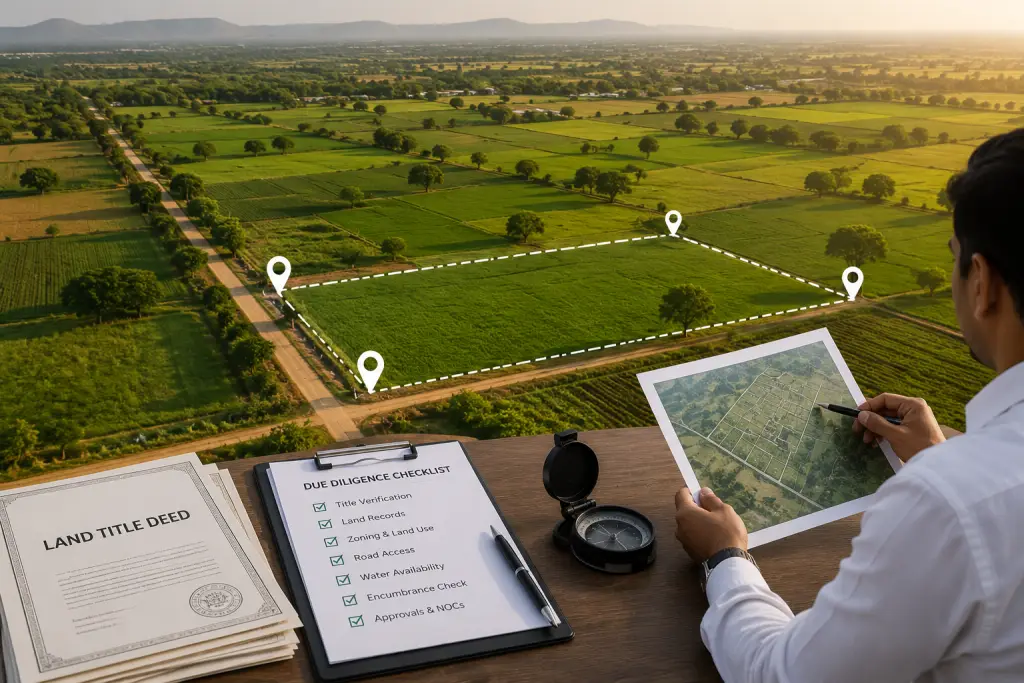
Farmland investment decisions should align with long-term appreciation potential, land usability, and regional development prospects. Beyond immediate pricing, investors must evaluate factors such as soil quality, water access, road connectivity, surrounding infrastructure, and future growth corridors.
A structured assessment of farmland suitability helps ensure sustainable land use, stronger asset security, and long-term value creation. Strategic location selection and development potential play a critical role in maximizing future returns.
Understanding Complete Farmland Acquisition Costs
The purchase value is only one component of a farmland investment. Buyers must evaluate additional considerations such as land conversion charges (where applicable), registry expenses, legal verification costs, fencing, water resources, road development, and long-term maintenance requirements.
A structured cost assessment provides financial clarity and helps investors avoid unexpected liabilities after acquisition. Proper planning ensures that the farmland investment remains sustainable, secure, and aligned with future appreciation potential.


Choosing the Right Time for Farmland Investment
Farmland investment decisions should be based on long-term land potential, infrastructure growth, and future regional development rather than short-term market movement. Factors such as road connectivity, water availability, surrounding development activity, and land usability play a crucial role in identifying the right investment opportunity.
A well-planned farmland acquisition aligns financial readiness with strategic location selection and long-term appreciation goals. Structured evaluation helps investors secure both asset value and future growth potential while reducing avoidable investment risks.
Looking to Invest in Farmland?
Connect with our land advisory team for structured guidance on agricultural land, gated farm plots, and long-term land investment opportunities.